
On October 23-24, an international multidisciplinary consensus conference was held in Tbilisi, organized by the Georgian Association of Oncological Urology.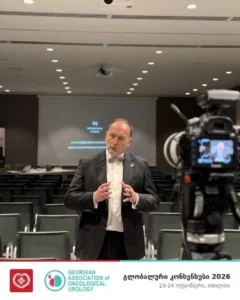 "Modern Management of Prostate Cancer - A Global Consensus", which brought together leading professors, urologists, oncologists, radiologists, and healthcare professionals from Germany, Sweden, Azerbaijan, Ukraine, and Georgia.
The main goal of the two-day scientific event was to share the latest international experience in prostate cancer diagnosis and treatment, discuss evidence-based approaches, and promote the development of modern clinical practice in Georgia.
The conference co-chairs were Professor Guram Karazanashvili, President of the Georgian Association of Oncological Urology, Founder of the Karazanashvili Robotic Center, and Professor Markus Grafen, Head of the world-renowned Martini-Klinik Prostate Cancer Center in Germany.
The international scientific meeting was attended by Swedish Professor Goran Algren, Azerbaijani Professor Samir Javad-zadeh, Ukrainian specialists – Professor Eduard Stakhovsky and Serhiy Prindiuk, as well as representatives of various leading medical institutions in Georgia.
Representatives of the Georgian Parliament's Committee on Health Care and Social Issues and the Ministry of Health also attended the event.
Prostate Cancer Early From diagnostics Treatment The latest Before technologies
The conference's scientific program included four main sessions and covered the full spectrum of prostate cancer management – from early detection and screening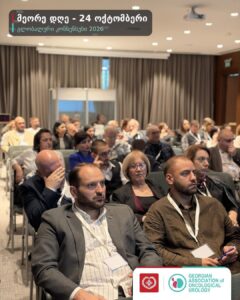 Before treating complex and widespread forms of the disease.
The main topics of the first day were early diagnosis of prostate cancer, modern screening methods, active surveillance, and organ-preserving treatment options.
Special attention was paid to 29 MHz microultrasound - a high-resolution technology, which is one of the modern methods for early detection of prostate cancer and targeted biopsy of suspicious foci.
Professor Guram Karazanashvili shared his practical experience in using this technology with international colleagues and discussed its capabilities in diagnosing prostate cancer and assessing the stage of the disease.
An important topic of discussion was focal therapy, including the Focal One® robotic HIFU system, which allows selected patients to target the tumor site while preserving healthy tissue as much as possible.
International experts also discussed treatment approaches that aim not only to control the oncological disease, but also to maximize the patient's quality of life, urinary retention, and sexual function.
Georgian Robotic Surgery Experience International Attention In the center
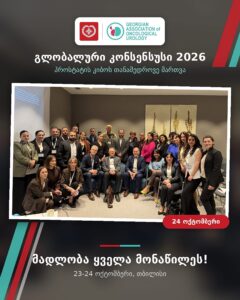 The second day of the conference was dedicated to radical treatment, robotic surgery, radiation therapy, and modern options for managing locally advanced and metastatic prostate cancer.
One of the important directions in Georgia and the Caucasus region was the development of robotic surgery.
Professor Guram Karazanashvili presented the participants with the experience of introducing and developing robotic-assisted radical prostatectomy in Georgia. He also discussed modern approaches to the surgical treatment of complex, high-risk prostate cancer.
German Professor Markus Grafen shared his experience at Martini-Klinik with his colleagues, including robotic prostatectomy standards, nerve-sparing surgical techniques, and postoperative functional recovery.
An important place was also given to multidisciplinary treatment - how to choose the optimal combination of surgery, radiation, and systemic therapy for a specific patient, taking into account the stage of the disease, risk, and individual characteristics.
Within the framework of the conference, Georgian and foreign specialists discussed clinical cases and engaged in professional discussions about the practical application of modern standards of diagnosis and treatment.
International Experience Georgian Medicine For development
One of the main values of the conference was the unification of experts with different medical specialties and international experience in one space.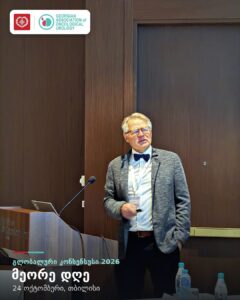
In modern onco-urology, effective management of prostate cancer is no longer based on the decisions of a single specialist. Early detection of the disease, determination of an individual treatment strategy, and maintenance of the patient's quality of life require close collaboration between urologists, oncologists, radiologists, pathologists, and other specialists.
It is the importance of this multidisciplinary approach that was highlighted during the two-day scientific meeting.
Such international events contribute to the dissemination of modern medical knowledge in Georgia, deepening professional cooperation, and introducing international standards into Georgian clinical practice.
The conference held in Tbilisi on October 23-24 once again demonstrated Georgia's capabilities to be an important space for international professional dialogue and experience sharing in the field of modern onco-urology.
The conference concluded with professional discussions and consideration of opportunities for future collaboration, which creates an important foundation for the further development of prostate cancer diagnostics and treatment.